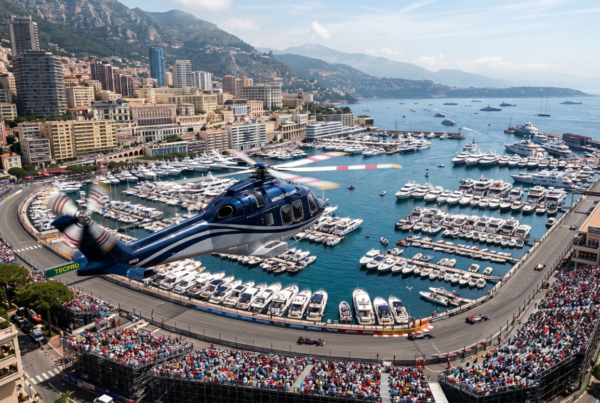

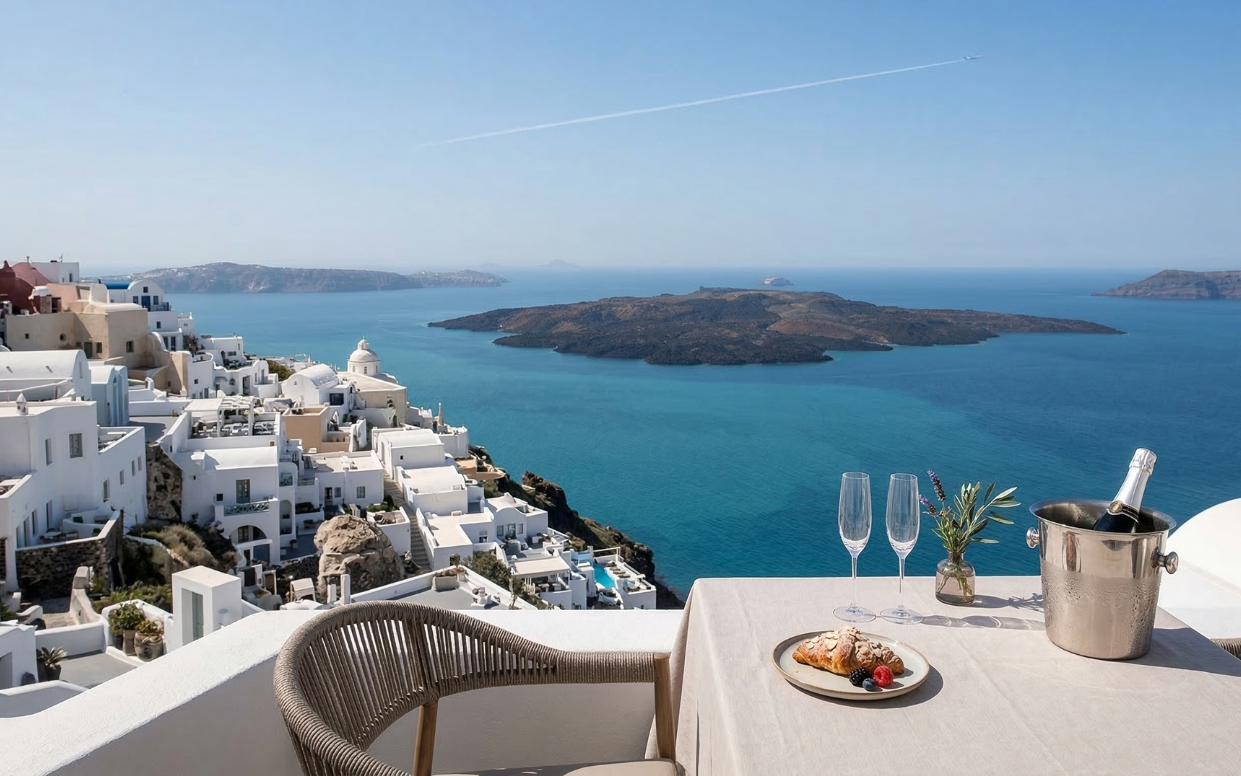
The Greek Islands evoke visions of whitewashed Cycladic architecture cascading down volcanic cliffs, azure Aegean waters lapping against sun-bleached beaches, and sunset views that have inspired countless photographs and travel dreams. While peak summer (July-August) brings overwhelming crowds and premium pricing to Santorini and Mykonos, early spring presents a compelling alternative for discerning travelers who understand the advantages of shoulder season timing.
March and April 2026 offer a unique window to experience the Greek Islands before mass tourism arrives. Temperatures climb into the comfortable 60s°F, hotels open their doors after winter closures, restaurants prepare for the season ahead, and the islands reveal their authentic character without summer’s intensity. For luxury travelers seeking Mediterranean warmth, dramatic scenery, and cultural immersion while avoiding peak crowds, early season private jet charter to the Greek Islands delivers an exceptional experience.
This comprehensive guide explores everything you need to know about chartering a private jet to Greece’s most iconic islands during early season 2026. From understanding what to expect in March versus summer, navigating Athens as your gateway hub, comparing Santorini and Mykonos, to practical logistics of island airport access and seasonal hotel availability, discover how to optimize your Greek Islands journey before the summer rush begins.
Understanding Early Season Greek Islands Travel
What Makes March-April Different from Summer
The Greek Islands experience dramatic seasonal transformation. Peak summer sees Santorini and Mykonos overwhelmed with cruise ship passengers, bachelor/bachelorette parties, and international tourists creating congestion at iconic photo spots, fully booked hotels, and reservation challenges at popular restaurants. Shoulder season – specifically late March through April, presents a fundamentally different experience.
March weather in the Cyclades ranges from 55-65°F during the day with cooler evenings requiring light jackets or sweaters. Rainfall becomes less frequent as spring progresses, though occasional showers still occur. The Aegean Sea temperature hovers around 60°F, too cool for most swimmers but perfect for coastal walks and boat tours. Sunshine hours increase steadily, with clear skies becoming more reliable by late March and April.
The trade-off involves understanding what hasn’t opened yet. Many beach clubs remain closed until May, some restaurants maintain winter schedules or haven’t reopened, and nightlife operates at reduced capacity compared to summer’s full-throttle energy. However, for travelers prioritizing scenic beauty, archaeological sites, wine tours, cultural experiences, and peaceful luxury over beach clubs and party scenes, early season delivers superior value and atmosphere.
Is Santorini Open in March?
Yes, Santorini is definitively open in March, though with important caveats. The island’s major hotels, particularly luxury properties like Grace Hotel Santorini, Katikies Hotel, and Canaves Oia, typically open by mid-March in anticipation of Easter travel and early season visitors. Many restaurants in Fira, Oia, and other villages operate year-round or reopen by early March, though some establishments wait until April or May.
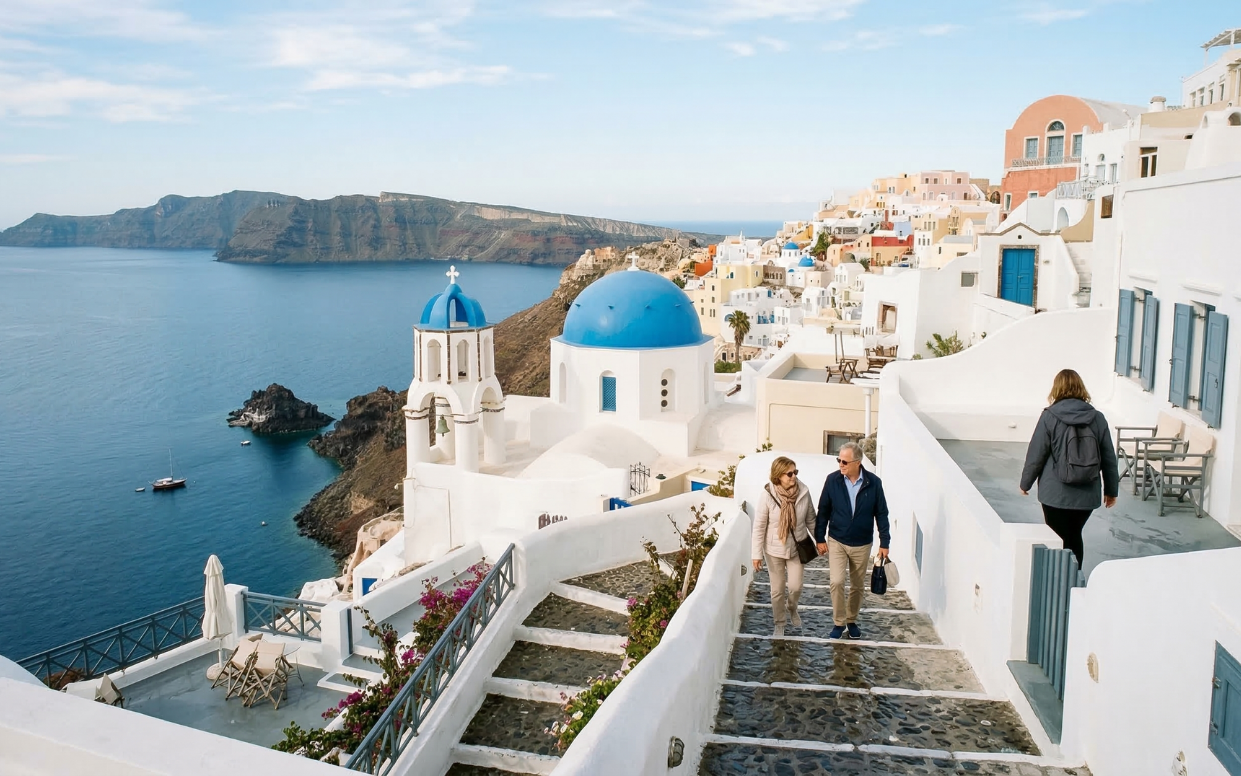
Santorini’s iconic attractions – the caldera views, Oia’s blue-domed churches, Ancient Akrotiri archaeological site, Red Beach, and wine museums, remain accessible throughout winter and early spring. In fact, visiting these sites in March means minimal crowds, easier photography opportunities at Instagram-famous locations, and more authentic interactions with local residents who aren’t yet overwhelmed by summer’s tourist deluge.
The wine experience actually improves during shoulder season. Santorini’s volcanic soil produces distinctive Assyrtiko wines celebrated by sommeliers worldwide. Wineries like Santo Wines, Venetsanos Winery, and Estate Argyros offer tastings year-round, with more personalized attention during quieter March periods than summer’s group tour rush.
Weather Expectations and Seasonal Advantages
March and April weather in the Greek Islands requires realistic expectations. You won’t experience the guaranteed 85°F sunshine and calm seas of July and August. Instead, expect variable conditions: some days delivering perfect 65°F sunshine, others bringing cooler temperatures, wind, or brief showers. Pack layers, bring a light jacket for evenings, and maintain flexible itineraries that adapt to daily conditions.
The advantages, however, prove substantial. Hotel rates during March often run 40-60% lower than peak July-August pricing. Iconic viewpoints like Oia’s sunset spot become accessible without arriving three hours early to claim space among hundreds of tourists. Restaurant reservations at sought-after venues happen with days’ notice rather than requiring months of advance booking. The islands feel more authentic, with local rhythms visible rather than buried beneath tourist infrastructure.
For luxury travelers accustomed to exclusive experiences, shoulder season Greek Islands deliver something peak summer cannot: genuine tranquility in one of the world’s most photographed destinations.
Why Choose Private Jet Charter for Greek Islands
Athens Gateway Strategy
Private jet access to the Greek Islands typically involves Athens International Airport (ATH/LGAV) as your primary gateway. Athens, located on mainland Greece, operates one of Europe’s most modern airports with comprehensive private aviation facilities. From Athens, private jets continue to island airports – a strategic routing that proves more reliable and often more economical than attempting direct transatlantic flights to small island airports with limited infrastructure.

Athens International Airport (Eleftherios Venizelos) features dedicated General Aviation Terminal facilities managed by Swissport Executive and Goldair Handling. These FBO services provide VIP lounges, private security screening, expedited customs and immigration, meeting rooms, and direct planeside vehicle access. The airport operates 24 hours, accommodating any arrival time from transatlantic flights.
Processing through Athens’ private aviation terminal typically requires just 15-25 minutes from landing to ground vehicle departure. For continuing flights to islands, passengers can either clear Greek customs in Athens (recommended) or at island destinations, though Athens offers superior facilities and efficiency.
Direct Island Airport Access
From Athens, private jets connect to the two primary Cyclades island airports: Santorini (Thira) Airport (JTR/LGSR) and Mykonos Airport (JMK/LGMK). Both airports accommodate private jets, though with important limitations.
Santorini Thira Airport features a single 7,218-foot runway capable of handling aircraft up to midsize categories. Light jets (Citation CJ3+, Phenom 300) and midsize jets (Hawker 800XP, Citation Excel) operate comfortably. Larger aircraft face weight restrictions and performance considerations due to runway length and elevation. The airport’s general aviation services remain basic compared to major European hubs, though adequate for private jet operations.
Mykonos Airport operates a 6,234-foot runway similarly accommodating light to midsize jets. During summer peak season, Mykonos experiences significant congestion with commercial and private traffic creating slot constraints and parking challenges. March shoulder season offers dramatically better availability and operational flexibility.
Flight times from Athens to Santorini average 40-45 minutes, while Athens to Mykonos requires approximately 30-35 minutes. These short hops make multi-island itineraries highly feasible – you could easily visit both Santorini and Mykonos during a week-long trip with minimal flight time consumption.
Time Efficiency and Crowd Avoidance
Commercial flights to Greek Islands from the United States require connections through European hubs – typically London, Paris, Frankfurt, or Amsterdam – then Athens, then island destinations. Total travel time easily exceeds 18-24 hours when factoring layovers, connections, and ground transportation. Private jet charter compresses this timeline dramatically.
A nonstop private flight from New York to Athens on an ultra-long-range aircraft like the Gulfstream G650 or Global 7500 requires approximately 10 hours. Land, clear customs through the private terminal (20 minutes), board your continuing aircraft to Santorini (45 minutes flight), and you’re stepping into your Oia hotel approximately 12-13 hours after departing New York – a full day faster than commercial routing with exponentially less stress.
During early season March-April, this efficiency becomes even more pronounced because airport congestion at Athens and island destinations remains minimal compared to summer chaos.
Santorini: Caldera Views and Volcanic Beauty
Why Santorini in Early Spring
Santorini’s dramatic caldera formed by volcanic eruption approximately 3,600 years ago, creates one of the world’s most spectacular natural amphitheaters. Whitewashed buildings with blue-domed roofs cascade down cliff faces overlooking the submerged volcano, creating the iconic images that define Greek Island aesthetics.
Early spring Santorini showcases this beauty without summer’s overwhelming crowds. Oia’s famous sunset viewing spots become peaceful rather than shoulder-to-shoulder tourist masses. The caldera hiking path from Fira to Oia, a 6-mile trail offering continuous spectacular views, transforms into a pleasant experience rather than a hot, crowded ordeal. Photography enthusiasts capture images without photobombing tourists in every frame.
The island’s archaeological significance emerges more clearly during quieter periods. Ancient Akrotiri, a Minoan Bronze Age settlement preserved in volcanic ash (often called the “Pompeii of the Aegean”), allows contemplative exploration. Ancient Thera’s clifftop ruins overlooking the sea provide historical context without tour bus congestion.
Santorini’s wine culture particularly suits shoulder season visitors. The island’s volcanic soil and indigenous grape varieties (primarily Assyrtiko) produce distinctive wines celebrated internationally. Wineries scattered across the island offer tastings with panoramic caldera views. March visitors receive more personalized attention from winemakers and sommeliers not yet inundated with summer’s endless tour groups.
Santorini Hotels and Dining in March
Luxury accommodations on Santorini typically open by mid-March, with some properties waiting until early April. Grace Hotel Santorini in Imerovigli opens around March 15, featuring infinity pools overlooking the caldera and minimalist cave-inspired architecture. Katikies Hotel in Oia, known for its exclusive clifftop position and exceptional service, similarly opens mid-March. Canaves Oia Suites operates year-round or with very brief winter closures.
March rates at these properties often run 40-50% below peak July-August pricing, though still positioning as luxury properties with nightly rates from €400-800+ depending on room category and exact timing. Booking 6-8 weeks ahead provides best selection, as European travelers often book Easter period stays well in advance.
Dining options include year-round operations and seasonal reopenings. Sunset Ammoudi at Ammoudi Bay serves fresh seafood in a waterfront setting open throughout spring. Selene Restaurant in Pyrgos, Santorini’s Michelin-level fine dining establishment, operates year-round. Casual tavernas in Fira and other villages maintain service through shoulder season, offering traditional Greek specialties like fava (yellow split pea purée), tomatokeftedes (tomato fritters), and fresh grilled fish.
Santorini Activities Beyond Beach Clubs
Early season visitors discover Santorini’s non-beach attractions prove more rewarding than summer’s beach club scene anyway. Sailing tours around the caldera operate starting in April, offering swimming stops at hot springs, visits to volcanic islands, and sunset cruises. These tours become available with just days’ notice rather than requiring advance booking weeks ahead.
Wine tours represent Santorini’s signature experience. Most wineries operate tastings year-round or reopen by late March. Santo Wines perched on the caldera rim offers panoramic views with tastings. Venetsanos Winery, built into the cliffside with sunset views, provides architecture as impressive as its wines. Small-group or private wine tours visit 3-4 wineries with sommelier guides explaining volcanic terroir and indigenous varieties.
The island’s villages – Pyrgos, Megalochori, Emporio – maintain authentic Greek character visible when not overwhelmed by tourists. March allows genuine interactions with local residents, exploration of traditional architecture, and discovery of small tavernas serving home-cooked meals in settings unchanged for generations.
Mykonos: Cycladic Beauty with Party Potential
Mykonos in Shoulder Season
Mykonos earned its reputation as the “Ibiza of Greece” through legendary beach clubs, world-famous DJs, and nightlife rivaling any global destination. Summer Mykonos operates at full intensity, Paradise Beach and Super Paradise Beach pack thousands of partiers, Scorpios beach club hosts sunset sessions, and Mykonos Town’s bars pulse until dawn.
March presents a vastly different Mykonos. Most beach clubs remain closed, major nightlife venues operate reduced schedules or haven’t reopened, and the party scene exists in nascent rather than full form. However, for travelers seeking Mykonos’s aesthetic beauty, charming town center, pristine beaches, and cultural elements rather than peak party energy, early spring proves ideal.
Mykonos Town (Chora) with its labyrinthine streets, iconic windmills, whitewashed buildings with colorful doors and windows, and Little Venice waterfront quarter remains enchanting year-round. March allows strolling these streets without battling summer crowds, photographing landmarks without waiting for clear frames, and experiencing the town’s authentic rhythm.
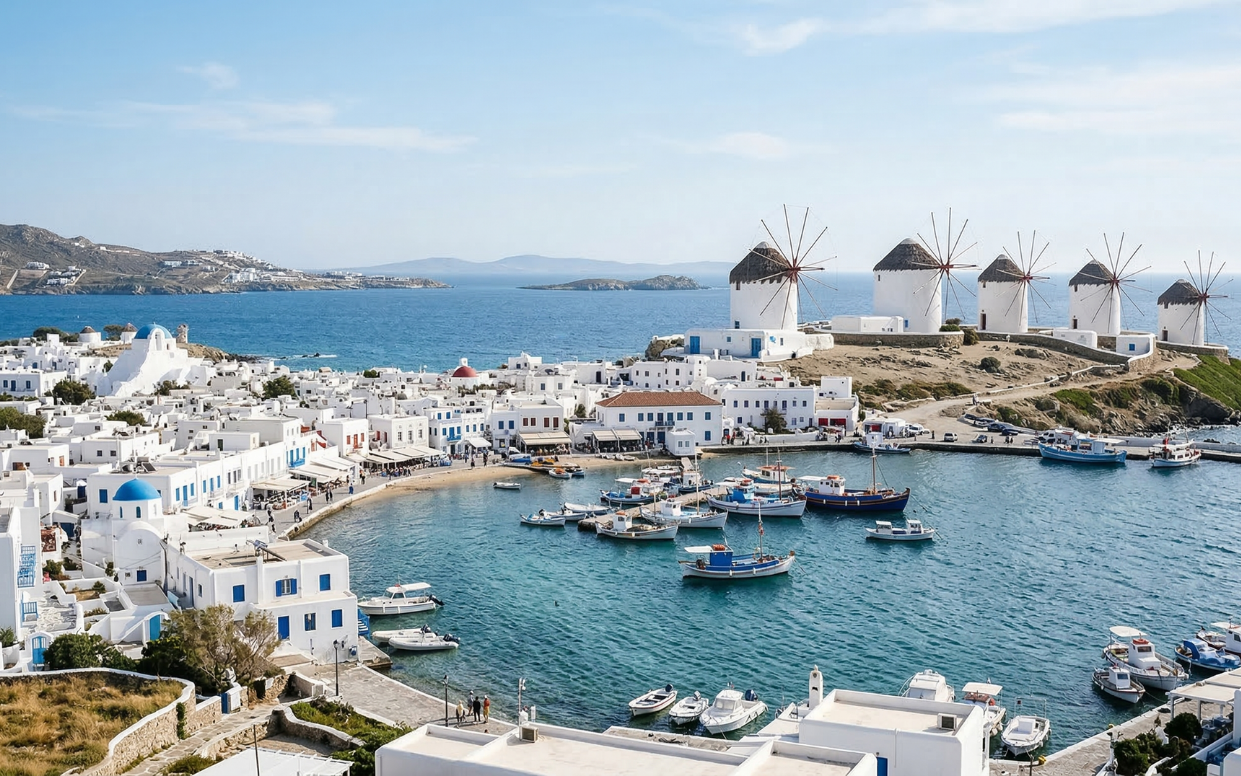
The island’s beaches, 25+ stretches of sand scattered around the coastline, become peaceful in March. While water remains too cool for extended swimming, beach walks, coastal exploration, and dramatic scenery viewing prove exceptional. Agios Sostis and Fokos Beach offer particularly beautiful settings without summer’s beach chair congestion.
Mykonos Cultural and Culinary Experiences
Beyond nightlife, Mykonos offers cultural depth often overlooked during party-focused summer visits. A short boat trip from Mykonos reaches Delos, one of Greece’s most important archaeological sites. This tiny island served as the mythological birthplace of Apollo and Artemis, hosting an ancient sanctuary and city now preserved as ruins. UNESCO World Heritage status protects the site, where excavations revealed temples, marketplaces, and residential districts dating to 3000 BCE.
Delos tours operate with reduced frequency in March but remain available through hotel concierges or direct booking with boat operators. The experience proves far superior to summer when hundreds of tourists crowd the small island simultaneously. March visitors might explore Delos’s ruins with just dozens of others, allowing contemplative appreciation of one of antiquity’s sacred sites.
Mykonos’s culinary scene maintains quality year-round at top establishments. Interni Restaurant serves Mediterranean fusion in a sophisticated garden setting. Kiki’s Tavern at Agios Sostis beach operates seasonally starting April, offering simple grilled meats and Greek salads in rustic beachfront surroundings that embody authentic island life. Niko’s Taverna in Mykonos Town provides traditional Greek cuisine in family-run settings.
Mykonos Luxury Accommodations
Mykonos’s luxury hotel portfolio rivals any Mediterranean destination, with properties opening throughout March and April. Cavo Tagoo, positioned on a cliff overlooking Mykonos Town, opens mid-March with infinity pools, cave-inspired suites, and exceptional sunset views. Bill & Coo Suites and Lounge, an exclusive small luxury hotel in Mykonos Town, operates year-round or with brief winter closure.
Mykonos Theoxenia, a boutique property near the windmills designed by noted architect Aris Konstantinidis, opens by April with 1960s-inspired aesthetics and intimate scale. March-April rates at these properties often run 30-50% below July-August peaks, providing value opportunities for luxury travelers.
Private Jet Logistics and Pricing
Transatlantic Route Options
Private jet charter from the United States to Greece requires ultra-long-range aircraft capabilities for nonstop service or strategic fuel stops on long-range jets. From New York to Athens (approximately 4,900 nautical miles), aircraft like the Gulfstream G650, Global 7500, Falcon 8X, or Bombardier Global 6000 accomplish the journey nonstop in 10-11 hours.
Charter costs for this route range $120,000-160,000 one-way depending on specific aircraft, timing, and operator. For groups of 8-10 passengers, per-person costs work out to $12,000-16,000—competitive with last-minute business class commercial tickets often exceeding $8,000-12,000 per person during peak periods, especially when considering the time savings and convenience.
From Miami or Los Angeles, the Athens route extends to 5,500-6,500 nautical miles requiring the longest-range aircraft in the private aviation fleet. A Gulfstream G650ER or Global 7500 handles these missions with pricing in the $140,000-180,000 range one-way.
European departures prove far more economical. London to Athens via private jet requires just 3 hours on midsize aircraft costing $25,000-35,000. Paris to Athens similarly runs approximately $28,000-38,000. These shorter European routes make Greece highly accessible for travelers already positioned in Europe.
Inter-Greece Island Hopping Costs
The Athens to Santorini and Athens to Mykonos routes represent high-frequency private jet sectors during tourist season. Light jets accommodate 4-6 passengers on these short hops (40 minutes to Santorini, 30 minutes to Mykonos) with pricing around $8,000-12,000 per route. Midsize jets for 6-8 passengers range $12,000-18,000.
For groups splitting costs, these inter-island flights become remarkably accessible. Eight passengers sharing a $14,000 flight pay approximately $1,750 each – often comparable to commercial tickets when considering convenience, schedule flexibility, and time savings. The ability to depart on your exact schedule rather than adapting to limited commercial flight times proves particularly valuable during shoulder season when flight frequency reduces.
Multi-island itineraries become highly feasible. An Athens arrival, Santorini visit (3 nights), Mykonos visit (3 nights), Athens return pattern involves two short positioning flights totaling approximately $20,000-30,000 beyond your transatlantic charter. Split among a group, this incremental cost delivers extraordinary destination diversity.
Aircraft Selection for Greek Islands
Light jets like the Citation CJ3+, Phenom 300, or Hawker 400XP work well for Athens-to-island routes and can operate into both Santorini and Mykonos with appropriate performance planning. These aircraft typically accommodate 4-7 passengers with limited luggage capacity suitable for 3-5 day island visits.
Midsize jets including the Hawker 800XP, Citation Excel, or Learjet 60 provide more cabin space and luggage capacity, ideal for week-long trips or groups up to 8 passengers. These aircraft handle the island routes comfortably while offering stand-up cabin headroom and enclosed lavatories for enhanced comfort.
For transatlantic service, ultra-long-range aircraft become necessary. The Gulfstream G650 remains the gold standard with exceptional range, speed, and cabin comfort for 10-14 hour flights. The Bombardier Global 7500 offers comparable capabilities with the longest range in business aviation, while the Falcon 8X provides tri-engine reliability and impressive performance.
Comparing Greek Islands to Amalfi Coast
Mediterranean Alternatives
Luxury travelers considering early season Mediterranean destinations often compare Greek Islands to Italy’s Amalfi Coast. Both deliver dramatic coastal scenery, sophisticated dining, luxury hotels, and cultural depth. Understanding the distinctions helps optimize destination selection.
The Amalfi Coast offers more developed infrastructure, easier ground transportation along the coastal road (despite its legendary curves), and closer proximity to major cultural sites like Pompeii, Herculaneum, and Capri. March weather proves slightly milder than Greek Islands, with average temperatures 2-5°F warmer. Italian cuisine and wine culture rival Greece’s offerings with different flavor profiles and traditions.
Greek Islands counter with more dramatic natural beauty, Santorini’s caldera creates scenery the Amalfi Coast cannot match. Archaeological significance runs deeper in Greece with sites like Delos, Akrotiri, and Ancient Thera. The island experience feels more removed from mainland Europe, creating genuine escape sensations. Greek hospitality traditions and slower pace contrast with Amalfi Coast’s sometimes frenetic tourist energy even during shoulder season.
From a private aviation perspective, both destinations prove accessible. Naples Capodichino Airport serves the Amalfi Coast with excellent FBO facilities, though ground transfers to Positano or Amalfi require 60-90 minutes. Greek Islands involve the Athens hub strategy with short connecting flights but avoid lengthy coastal drives.
Booking Your Early Season Greek Islands Charter
Advance Planning Timeline
Early season Greek Islands travel requires different booking strategies than peak summer. While July-August charters demand 8-12 weeks advance booking for best aircraft availability, March-April offers more flexibility. Booking 4-6 weeks ahead typically provides excellent aircraft selection and competitive pricing for transatlantic routes.
The caveat involves European Easter timing. Greek Orthodox Easter and Western Easter both fall on April 12, 2026 in a rare alignment, creating potential demand surge the week before Easter. Travelers planning late March or early April visits should book earlier to avoid Easter-related constraints.
Hotel and Ground Service Coordination
Elite charter operators like Jetswave Aviation coordinate comprehensive ground services beyond aircraft. This includes luxury hotel reservations at properties like Grace Santorini or Cavo Tagoo Mykonos, restaurant bookings at sought-after venues, private wine tours, yacht charters for caldera sailing, and ground transportation throughout your itinerary.
For Santorini, ground transportation primarily involves private drivers given the island’s limited taxi availability and challenging topography. Your charter operator coordinates vehicles meeting you at Thira Airport and providing service during your stay – essential for visiting multiple villages, wineries, and beaches without rental car stress on unfamiliar narrow roads.
Mykonos offers more developed taxi service and rental options, though private drivers still prove valuable for multi-stop touring and evening transportation when returning from restaurants or bars.
Discover the Greek Islands Before the Crowds
The Greek Islands during March and April 2026 offer luxury travelers a compelling proposition: experience Santorini’s caldera magnificence, Mykonos’s Cycladic charm, ancient archaeological treasures, distinctive wines, and authentic Greek hospitality without summer’s overwhelming crowds and premium pricing.
Early season requires understanding trade-offs, some venues haven’t opened, weather proves less predictable than guaranteed summer sunshine, and beach club energy operates at reduced intensity. However, for travelers prioritizing dramatic scenery, cultural depth, peaceful luxury, and value over peak party scenes, shoulder season delivers superior experiences.
Private jet charter transforms Greek Islands access from complex commercial routing through multiple connections into efficient point-to-point service. The Athens gateway strategy provides reliable infrastructure while short island hops make multi-destination itineraries remarkably feasible. For groups splitting charter costs, per-person economics compete with premium commercial tickets while delivering unmatched convenience.
As you plan 2026 Mediterranean travel, consider the Greek Islands before summer arrives. Whether seeking Santorini’s romantic caldera sunsets, Mykonos’s charming streets and beaches, or multi-island exploration combining both destinations, early season private jet charter creates the optimal experience.
Ready to experience the Greek Islands in early season 2026? Contact Jetswave Aviation today for personalized charter quotes, aircraft selection guidance, and comprehensive Greek Islands planning including Athens connections, island hotel partnerships, wine tour coordination, and bespoke ground services. Let us create an unforgettable Mediterranean journey that captures the Greek Islands at their most authentic.